Kunming Restaurants & Food Guide 2026: 20+ Must-Try Yunnan Dishes
Last verified: April 2026
Quick Answer: What to Eat in Kunming
Must-try dish: Crossing the Bridge Rice Noodles (过桥米线) — Kunming's signature dish, 30-50 RMB at local restaurants
Best budget meal: Zhuanxin Market — authentic Yunnan food, 10-15 RMB per item
Best season: June-October for wild mushroom hotpot (80-150 RMB per person)
Daily food budget: 50-80 RMB ($7-11 USD) for three solid local meals
Yunnan cuisine (滇菜, diāncài) is one of China's best-kept culinary secrets. While Sichuan and Cantonese food dominate internationally, Yunnan's cooking draws on an extraordinary range of ingredients — wild mushrooms foraged from mountain forests, flowers used in pastries and stir-fries, cured hams aged for years in highland villages, and rice noodles prepared in dozens of ways. Kunming, as the provincial capital, is where all of Yunnan's regional traditions converge. You can eat phenomenally well here for very little money.
Must-Try Dishes
过桥米线 — Crossing the Bridge Rice Noodles
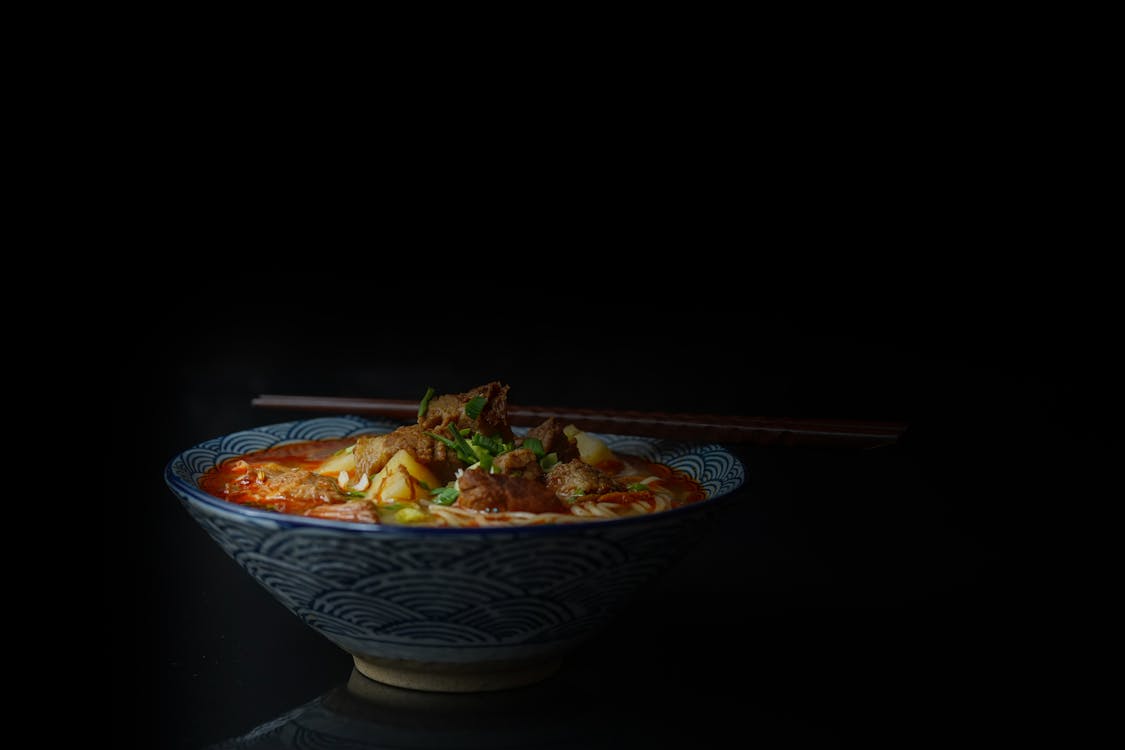
This is Kunming's signature dish, and it's unlike any noodle soup you've had before. You receive a bowl of piping-hot broth sealed under a layer of oil that keeps it near boiling. Alongside it come plates of raw ingredients — thin-sliced meat, quail eggs, vegetables, chrysanthemum petals, and rice noodles. You add them to the broth yourself, and the residual heat cooks everything in seconds. The ritual is half the experience.
Crossing the Bridge Rice Noodles come in tiers. A basic bowl at a street stall runs 15-25 RMB. A mid-range restaurant version with more side dishes costs 30-50 RMB. Upscale versions with dozens of ingredients can reach 80-120 RMB. For your first time, a 30-40 RMB bowl at a reputable chain like Jianxin Garden (建新园) or Qiaoxiangyuan (桥香园) is the sweet spot.
汽锅鸡 — Steam Pot Chicken
A Yunnan classic dating back centuries. A whole chicken is steamed in a special clay pot (汽锅) with a central chimney that channels steam through the meat. No water is added — the broth forms entirely from the chicken's own juices and the condensed steam. The result is an intensely flavored, clear golden soup with impossibly tender meat. Often prepared with medicinal herbs like 三七 (sanqi/pseudoginseng) or 天麻 (tianma/gastrodia). Simple, elegant, and deeply nourishing.
饵块 / 饵丝 — Rice Cakes and Rice Threads
Yunnan's answer to bread and pasta. Made from pounded glutinous rice, 饵块 (ěrkuài) are thick rice cakes that can be grilled, stir-fried, or boiled in soup. The most iconic preparation is 烧饵块 (shāo ěrkuài) — a large rice cake grilled over charcoal until slightly charred, then brushed with chili sauce, fermented bean paste, or peanut sauce and wrapped around a fried dough stick. It's Kunming's quintessential breakfast, available at street stalls for 5-8 RMB. 饵丝 (ěrsī) are thinner rice threads, usually served in a rich broth with stewed meat.
宣威火腿 — Xuanwei Ham
Yunnan's answer to prosciutto or jamón. Xuanwei ham is dry-cured in the cool highlands of northeastern Yunnan for one to three years, developing a deep, complex flavor. You'll find it sliced thin as an appetizer, diced into stir-fries, stuffed into steamed buns, and baked into the famous flower cakes. One of China's three great hams (alongside Jinhua and Rugao), and arguably the most flavorful.
鲜花饼 — Flower Cakes
Kunming's most popular souvenir and a genuinely delicious pastry. A flaky, buttery crust filled with a paste made from edible roses grown in Yunnan's fields. The best ones balance fragrance with sweetness — not overpowering, just a subtle floral note with each bite. Available everywhere from airport shops to bakeries. Jiahua (嘉华) is the most well-known brand, but smaller bakeries in the Green Lake area often make better versions. Best eaten fresh.
豆花米线 — Tofu Pudding Rice Noodles
A Kunming specialty that's hard to find elsewhere. Rice noodles topped with a ladle of silky, fresh tofu pudding, then dressed with chili oil, soy sauce, Sichuan pepper, scallions, ground meat, and pickled vegetables. The tofu pudding melts into the noodles and creates a rich, creamy sauce. A satisfying lunch for 10-15 RMB. Look for it at small shops around Wenlin Jie and the old city.
破酥包 — Flaky Buns
Kunming's take on the steamed bun. Unlike the smooth-skinned baozi found elsewhere in China, 破酥包 have a distinctly layered, slightly flaky texture — almost like a steamed croissant. Fillings range from savory (pork, mushroom) to sweet (rose, bean paste). The best-known spot is Xiangyun (祥云) branded shops. Cheap, filling, and perfect for breakfast — 2-4 RMB per bun.
Wild Mushroom Season (June - October)
This is Kunming's most exciting food event. Yunnan produces more than half of China's edible wild mushrooms, and Kunming is the undisputed mushroom capital. When the summer rains arrive in June, hundreds of varieties flood the markets and restaurants. For four months, the city becomes obsessed with fungi.
What to Try
- 牛肝菌 (niúgānjūn) — porcini-family mushrooms, meaty and rich. Pan-fried with chili and garlic.
- 鸡枞 (jīzōng) — the "king of mushrooms" in Yunnan. Delicate, chicken-like flavor. Expensive but worth trying once. Often fried in oil and served as a condiment.
- 干巴菌 (gānbajūn) — looks unpromising (dark, shredded), tastes extraordinary. Stir-fried with chili and ham. Intensely savory and aromatic.
- 青头菌 (qīngtóujūn) — greenish caps, mild flavor. Often stuffed with meat paste and steamed.
- 松茸 (sōngróng) — matsutake. Prized in Japanese cuisine too. Sliced thin and grilled, or added to soup. Expensive.
- 见手青 (jiànshǒuqīng) — turns blue when touched. Mildly toxic if undercooked. Must be thoroughly cooked. A local favorite for the bold.
Where to Eat Mushrooms
During season, almost every restaurant adds mushroom dishes to the menu. For dedicated mushroom hotpot, head to restaurants along Guanshang (关上) or the cluster of mushroom restaurants on Shibo Lu (世博路). Mushroom hotpot typically costs 80-150 RMB per person — you pick your mushrooms from a display, and they're cooked in a broth at your table.
Safety warning: Never forage wild mushrooms yourself. Every year, people in Yunnan are hospitalized or killed from eating misidentified fungi. Stick to established restaurants and markets where sellers know their species. If a restaurant serves mushrooms during season, they know what they're doing.
Mushroom Markets
Visit Kunming's Mujiaying Mushroom Market (木家营野生菌市场) for the full sensory experience. Dozens of vendors lay out baskets of freshly foraged fungi in bewildering variety. Even if you don't buy, it's worth a visit just to see the scale of Yunnan's mushroom culture.

Where to Eat
Zhuanxin Market (篆新农贸市场)
Kunming's most famous food market and the single best place to eat cheap, authentic Yunnan food. Located near Yunnan University, this sprawling wet market has an entire floor dedicated to prepared food stalls. Grilled tofu, rice noodles, fresh fruit shakes, minority-style grilled meats, pickled vegetables — the variety is staggering. Most items cost 8-15 RMB. Go hungry, eat everything. Mornings and lunchtime are busiest. Not touristy — this is where locals eat.
Nanping Walking Street (南屏步行街)
Kunming's main pedestrian commercial area. The street itself has chain restaurants and fast food, but the side streets and alleys (especially the lanes between Nanping Jie and Jinbi Lu) are packed with small local restaurants. Good for Crossing the Bridge Rice Noodles, roast duck, hot pot, and casual Yunnan restaurants. Price range varies widely — from 15 RMB noodle shops to 100+ RMB restaurant meals.
Wenlin Jie / Green Lake Area (文林街 / 翠湖周边)
The expat-friendly zone near Yunnan University. A mix of local restaurants, Western-style cafes, and international food. Good for when you want a burger, pizza, or coffee alongside your Yunnan food exploration. Salvador's Coffee House is a longtime expat landmark. Street food vendors set up in the evenings along the smaller alleys.
Kundu Night Market (昆都夜市)
Kunming's night food scene centers around the Kundu area, where barbecue stalls, beer gardens, and late-night noodle shops operate until the small hours. Grilled fish, lamb skewers, crayfish (seasonal), and cold beer. The vibe is lively and social — big groups sharing platters of grilled food at outdoor tables. Most active from 8 PM onward.
Guanshang Area (关上)
A diverse food district in southeast Kunming with strong Southeast Asian influences — Vietnamese pho, Thai-style restaurants, and some of Kunming's best mushroom hotpot places. Worth the trip for more adventurous eating. Also home to a significant Hui Muslim community, so excellent halal restaurants are concentrated here.
Restaurant Chains Worth Knowing
- 建新园 (Jianxin Garden) — rice noodle chain. Reliable Crossing the Bridge Rice Noodles. Locations everywhere.
- 桥香园 (Qiaoxiangyuan) — another rice noodle chain. Slightly more upscale.
- 福照楼 (Fuzhao Lou) — Yunnan-style restaurant. Good for steam pot chicken and Yunnan banquet dishes. Mid-range.
- 1910火车南站 (1910 Train South Station) — Yunnan cuisine in a railway-themed setting. Tourist-friendly but decent food.
Price Guide (2026)
| Category | Price Range (per person) |
|---|---|
| Street food / market stalls | 10-15 RMB ($1.50-2 USD) |
| Local restaurants (rice noodles, set meals) | 20-40 RMB ($3-6 USD) |
| Mid-range Yunnan restaurants | 60-100 RMB ($8-14 USD) |
| Mushroom hotpot (in season) | 80-150 RMB ($11-21 USD) |
| Western food (cafes, pizza, burgers) | 50-120 RMB ($7-17 USD) |
| Coffee (local cafe) | 20-35 RMB ($3-5 USD) |
| Beer (local brand, 600ml) | 8-15 RMB ($1-2 USD) |
Kunming is extremely affordable for food. A daily budget of 50-80 RMB ($7-11 USD) covers three solid meals if you eat at local restaurants and street stalls. You'd struggle to spend more than 150 RMB/day unless you're actively seeking out expensive restaurants. For a complete monthly budget breakdown including food costs, see our cost of living guide.
Vegetarian, Halal & Dietary Needs
Vegetarian Food
Kunming has a strong Buddhist vegetarian (素食) tradition. Look for restaurants marked 素餐馆 or 素食 — these serve entirely plant-based menus, often with impressive mock-meat dishes. Several are located near temples. Beyond dedicated vegetarian restaurants, Yunnan cuisine naturally includes many vegetable and mushroom dishes, though be aware that most "vegetable" dishes in regular restaurants may contain small amounts of meat or be cooked in lard.
Useful phrase: 我吃素,不要肉 (wǒ chī sù, bùyào ròu) — "I'm vegetarian, no meat." Be specific: also say 不要鸡肉 (no chicken), 不要鱼 (no fish) if needed, as "meat" (肉) sometimes only means pork in local understanding.
Halal Food
Kunming has a significant Hui Muslim (回族) community, particularly in the Shuncheng Jie and Guanshang areas. Halal restaurants (清真) are common and clearly marked with Arabic script and green signage. Specialties include beef rice noodles (牛肉米线), hand-pulled noodles, lamb dishes, and flatbreads. These restaurants are excellent regardless of dietary requirements — the beef noodles at Hui restaurants are some of the best food in Kunming.
Allergies and Intolerances
Allergy awareness in Chinese restaurants is limited. There are no standardized allergen menus. Your best strategies:
- Peanut allergy: 我对花生过敏 (wǒ duì huāshēng guòmǐn). Peanuts and peanut oil are common in Yunnan cooking.
- Gluten-free: Difficult but not impossible. Rice noodles (米线) are naturally gluten-free. Soy sauce contains wheat — ask for dishes without it: 不要酱油 (bùyào jiàngyóu).
- Dairy-free: Easy. Dairy is rarely used in Yunnan cooking, except for 乳扇 (rǔshān, a Dali cheese specialty) and some Western-influenced cafes.
- Write your allergies in Chinese on a card and show it at restaurants. Language schools like KCEL sometimes organize food tours and cooking classes as cultural activities — these are a great way to learn about ingredients and practice ordering food in Chinese.
Grocery Shopping
Supermarkets
Major international chains operate in Kunming:
- Walmart (沃尔玛) — multiple locations. Good for imported goods, snacks, and household items.
- Carrefour (家乐福) — similar to Walmart. Some locations have better produce.
- RT-Mart (大润发) — Chinese hypermarket chain. Competitive prices.
For imported Western products (cheese, pasta, olive oil, cereal), try the import sections at Walmart or specialty shops on Taobao/JD.com. Selection in Kunming is more limited than in Beijing or Shanghai, but the basics are available.
Wet Markets (农贸市场)
For the freshest produce at the lowest prices, shop at wet markets. Every neighborhood has one. Vegetables, fruit, meat, tofu, spices, and prepared foods — all cheaper than supermarkets and usually fresher. The experience is also much more interesting. Bargaining is sometimes possible, though prices are generally fair. Bring your own bags.
Zhuanxin Market (mentioned above) doubles as both a food court and a wet market, making it a great one-stop destination.
Delivery Apps
For grocery delivery, Meituan (美团) and Ele.me (饿了么) deliver from restaurants and supermarkets. Hema (盒马) is Alibaba's premium grocery delivery service with a good selection. All apps are in Chinese — Google Translate's camera mode helps navigate.
Best Restaurants in Kunming (2026)
These are consistently recommended by locals and long-term expats. Organized by budget and cuisine type.
Best for Crossing the Bridge Rice Noodles
- 建新园 Jianxin Garden — The city's most trusted rice noodle chain. Multiple locations across Kunming. Broth is rich and carefully made. The mid-tier bowl (35-45 RMB) hits the sweet spot. Lines at lunch are a sign of quality, not a deterrent.
- 桥香园 Qiaoxiangyuan — Slightly more upscale than Jianxin, with more elaborate side dishes. Good for a first-timer who wants the full ceremonial experience. Budget 40-60 RMB.
- 过桥米线老店 (near Cuihu Park) — Smaller, family-run shops near Green Lake tend to have homelier broth. Less consistent but more character.
Best for Yunnan Banquet Food (汽锅鸡 & Full Yunnan Cuisine)
- 福照楼 Fuzhao Lou — The go-to for serious Yunnan cooking: steam pot chicken, pine mushroom dishes, Xuanwei ham preparations. Service is formal. Budget 100-150 RMB per person. Reserve for dinner.
- 1910火车南站 — A railway-themed restaurant popular with tourists and locals alike. Food is genuinely good (steam pot chicken, fried goat cheese), not just a gimmick. Helpful for first-time visitors who want a full Yunnan meal in a relaxed setting. Budget 80-120 RMB.
Best for Wild Mushroom Hotpot (June–October only)
- 世博路菌子一条街 (Mushroom Restaurant Row, Shibo Lu) — A strip of dedicated mushroom hotpot restaurants where locals flood every summer. You pick fresh mushrooms from a display case; staff handle preparation. Budget 100-150 RMB per person. Go with a local if possible — ordering strategy matters for mushroom hotpot.
- 关上片区菌子火锅 — Several reliable mushroom hotpot spots in the Guanshang area (southeastern Kunming). Slightly cheaper than Shibo Lu. Ask your hotel or apartment host for a current recommendation, as the best spots change each season.
Best for Street Food & Budget Meals
- 篆新农贸市场 Zhuanxin Market — Already detailed above, but worth reiterating: this is the single best place for cheap, authentic food in Kunming. Go at 11 AM on a weekday. Budget 30-50 RMB for a full meal with snacks.
- 烧饵块 stalls near bus stations — Grilled rice cake wrapped around a fried dough stick. Look for charcoal-fired stalls near major bus stations and university gates in the morning. 5-8 RMB. The definitive Kunming breakfast.
- Green Lake park vendors (evenings) — Around 翠湖 Cuihu Lake from 5 PM onward, small vendors set up with snacks, grilled tofu, and drinks. Atmospheric and cheap.
Best for Expat / Western Food
- Salvador's Coffee House (Wenlin Jie) — Kunming's oldest expat cafe. Burritos, sandwiches, breakfasts, and a community noticeboard. Touristy but reliably good. Budget 60-100 RMB.
- Prague Cafe (Wenlin Jie area) — European cafe atmosphere, pasta, and coffee. Popular with Yunnan University international students. Budget 60-90 RMB.
- Salvadors area coffee roasters — Several independent specialty coffee shops have opened in the 文林街 area in recent years. Look for local Yunnan beans.
Best for Halal Food (清真)
- 顺城街牛肉米线 (Shuncheng Jie area) — The concentration of Hui Muslim restaurants around Shuncheng Street is Kunming's best spot for beef rice noodles. The broth is deeper and beefier than the standard Crossing the Bridge style. 15-25 RMB per bowl. Breakfast or lunch only.
- 清真兰州拉面 (various) — Hand-pulled noodle shops run by Hui families. A step up from the national chain versions. Scattered across the city; ask locals for current best.
Practical tip: For current recommendations, check 大众点评 (Dianping) — China's Yelp equivalent. Filter by 昆明 and your neighborhood for the most up-to-date restaurant quality. The restaurants above have consistent reputations, but the best small local spots change — Dianping will always be more current than any guide.
Eating Tips for Visitors
- Learn basic food Chinese. Even a few words — 米线 (rice noodles), 不辣 (not spicy), 打包 (takeaway) — make ordering dramatically easier. If you have time during your Kunming stay, consider taking a Chinese language course where conversation practice often includes ordering food at restaurants — a practical and delicious way to improve your spoken skills.
- Point at what others are eating. In casual restaurants, pointing at a neighboring table's dish and saying 一样的 (yīyàng de — "same as that") works perfectly.
- Use Dianping (大众点评). China's equivalent of Yelp. Even if you can't read all the reviews, the photos and star ratings help you find good restaurants. Download it.
- Eat early for the best experience. Lunch rush is 11:30-12:30, dinner rush is 6:00-7:30. Popular small restaurants may sell out by 1 PM.
- Tap water is not drinkable. Boiled water or bottled water only. All restaurants serve boiled water (开水) or tea for free.
- Spice levels vary. Yunnan food is less aggressively spicy than Sichuan, but chili is present in many dishes. Say 微辣 (wēilà, mild spice) or 不辣 (bùlà, no spice) when ordering.
- Pay with your phone. WeChat Pay and Alipay are universal. Many small stalls don't carry change for cash. See our payments guide for setup instructions.
- Try everything at least once. Yunnan food is adventurous — insects, flowers, unusual herbs, fermented everything. The unfamiliar stuff is often the best stuff.
Frequently Asked Questions
What is the one dish I absolutely must try in Kunming?
Crossing the Bridge Rice Noodles (过桥米线). It's Kunming's defining dish, and the interactive cooking ritual makes it a memorable experience even if you've eaten noodle soups your whole life. Go to Jianxin Garden or Qiaoxiangyuan for a reliable first experience.
Is Kunming food very spicy?
Moderately. Yunnan cuisine uses chili frequently but not with the nuclear intensity of Sichuan or Hunan. Most restaurants can adjust spice levels on request. Some dishes — particularly those from the Dai or minority cuisines — can be quite hot, but you'll always be warned.
Is it safe to eat street food?
Generally yes. Stick to stalls that are busy (high turnover = fresh food), where you can see the food being cooked, and where locals are eating. Zhuanxin Market is an excellent and safe bet for street food. Avoid anything that looks like it's been sitting out for hours.
Can I eat wild mushrooms safely?
Yes, at restaurants. Mushroom restaurants in Kunming are experienced with preparation and species identification. Never buy mushrooms from roadside sellers and never forage yourself. At restaurants, the staff will ensure mushrooms are cooked thoroughly — this is non-negotiable, as many edible species are toxic when undercooked.
How do I order food if I don't speak Chinese?
Most restaurants have photo menus or display dishes in a glass case. Point and gesture. Use your phone to show photos of dishes you want. Google Translate's camera can translate menu items in real time. At popular chains, ordering is often done via a WeChat mini-program with pictures.
Where can I find Western food?
The Green Lake / Wenlin Jie area has the highest concentration of Western restaurants and cafes. Salvador's, Prague Cafe, and several pizza and burger joints cater to the expat and student crowd. Quality is decent but expect to pay 50-120 RMB per meal — significantly more than local food.
What about Yunnan coffee?
Yunnan grows most of China's arabica coffee, primarily in the Pu'er region. Kunming has a thriving specialty coffee scene with local roasters. Look for cafes serving 云南小粒咖啡 (Yunnan small-grain coffee). Quality has improved dramatically in recent years, and a good cup costs 20-35 RMB. Worth exploring if you're a coffee enthusiast.
What is the best restaurant in Kunming for a first-time visitor?
For a comprehensive first experience: 建新园 Jianxin Garden for lunch (Crossing the Bridge Rice Noodles, 35-45 RMB — the city's most iconic dish), and 1910火车南站 for dinner (full Yunnan menu, 80-120 RMB, relaxed atmosphere). Between meals, snack at 篆新农贸市场 — get grilled tofu, 豆花米线, and 烧饵块 all in one visit. These three spots give you the full Kunming food spectrum.
What should I eat in Kunming for breakfast?
The classic Kunming breakfast is 烧饵块 (shāo ěrkuài) — a grilled rice cake brushed with chili paste, wrapped around a fried dough stick. 5-8 RMB from charcoal-fired street stalls near bus stations and university gates. Alternatives: 破酥包 (flaky buns) from a steamed bun shop (2-4 RMB each), or a bowl of 豆花米线 (tofu pudding rice noodles) at a local noodle shop (10-15 RMB). Kunming breakfasts are cheap, filling, and eaten standing up.
What are the best restaurants in Kunming?
The best restaurants in Kunming span every budget and cuisine. For Crossing the Bridge Rice Noodles, pick 建新园 Jianxin Garden or 桥香园 Qiaoxiangyuan (35-60 RMB). For full Yunnan cuisine and steam pot chicken, go to 福照楼 Fuzhao Lou (100-150 RMB) or 1910火车南站 (80-120 RMB). For street food and budget meals, 篆新农贸市场 Zhuanxin Market is unbeatable (30-50 RMB full meal). For wild mushroom hotpot (June-October), head to 世博路菌子一条街 (Mushroom Restaurant Row). For halal beef rice noodles, try the 顺城街 area. See the Best Restaurants section above for a complete breakdown by cuisine and budget.
Are there good restaurants in Kunming for foreigners who don't speak Chinese?
Yes. Larger chains like 建新园 Jianxin Garden and 桥香园 Qiaoxiangyuan have photo menus and WeChat mini-program ordering with pictures. Western-friendly restaurants around Green Lake / Wenlin Jie (Salvador's Coffee House, Prague Cafe) have English-speaking staff and English menus. For Yunnan cuisine with photo menus, 1910火车南站 is the most foreigner-friendly — tourist-tested but genuinely good food. Use Dianping (大众点评) to find current top-rated spots filtered by 昆明, and Google Translate's camera mode to read any menu. Ordering at almost any Kunming restaurant is workable with photos and gestures.
Was this guide helpful?
Thanks for the feedback!
Questions? Email us at hello@inyunnan.com